

You Have More Health Insurance Options Than You Think
Episode Summary
- Indemnity (fixed benefit) plans are a legal, regulated form of insurance that sits outside the ACA’s “major medical” category — often 45-50% cheaper than marketplace plans, but medically underwritten rather than guaranteed issue.
- Cash-pay and “tell them you don’t have insurance” negotiating can shrink hospital and ER bills dramatically, and indemnity plans are built to work alongside that strategy.
- These plans aren’t available direct-to-consumer — they’re sold through licensed agents/brokers, are available to groups under 50 employees, don’t meet ACA compliance for larger employer groups, and coverage for mental health and prescriptions varies by carrier.
The Brokerage Blind Spot That’s Costing Employers Billions
Episode Summary
- Donovan Pyle explains that most employers default to a narrow set of legacy brokers and carriers not because that’s the whole market, but because the industry has conditioned CFOs and HR teams to believe there are only a few options, when the real marketplace of strategies is vast and constantly evolving.
- He breaks down how the broker distribution channel emerged from 1930s hospital-founded insurers and 1938 minimum wage law loopholes, and argues that legacy brokers and PBMs are financially incentivized against the employers they serve, contributing to roughly 25% of the $1.3 trillion employers spend annually on healthcare being wasted.
- Pyle lays out his fiduciary process for fixing this: establish governance, get unbiased professional advice, assess where you stand, build a procurement roadmap, and manage the resulting program, closing with a call to action to download his book’s executive summary at fixinghealthcare.com.
Healthcare Without Permission: How Direct Primary Care Puts Patients First
Episode Summary
- Dr. Maryal Concepcion shares how a corporate ultimatum during her second pregnancy pushed her out of insurance-driven medicine and into direct primary care, and how her award-winning My DPC Story podcast grew out of that experience.
- The conversation reframes the core problem as access to care versus access to insurance, covering DPC’s small patient panels, real-time physician access, typical $75–$100/month pricing, and how recent policy changes (HR1) are accelerating interest.
- Dan and Maryal discuss the movement’s expansion into direct specialty care, state-level DPC networks like CaliDPC.com, and how both DPC and health sharing (e.g. Zion HealthShare) spread largely by word of mouth.
Behind the Benefits Package: What HR Sees That Employees Don’t
Episode Summary
- John Bischoff, Chief People Officer at Canopy Mortgage, walks through the reality of employer benefits from the HR seat.
- Brokers and carriers largely sell the same packaged plans with little real differentiation, alternatives like health sharing rarely make it onto the menu, and employees struggle to take ownership of benefits they were never given the tools to understand.
- Be vocal with HR, because the quiet middle of an employee base is where the most useful feedback lives, and the easiest first ask is direct primary care, now more accessible to employers thanks to pre-tax and HSA-eligibility rule changes.
Care Over Codes: Why Doctors Are Walking Away From Insurance
Episode Summary
- Dr. Umair Malik explains how direct primary care let him trade rushed 15-minute insurance visits for 60-minute appointments, getting to the root of patient problems instead of just handing out prescriptions.
- By cutting out the middleman and working directly for patients, his practice delivers transparent cash pricing, faster care (a $1,000 cash MRI scheduled in two days), and even refunds, which are virtually unheard of in traditional healthcare.
- He argues the broken insurance system may not be fixable and that a parallel cash-based ecosystem of DPC doctors, imaging centers, and specialists is already emerging, accelerated by tech and price transparency.
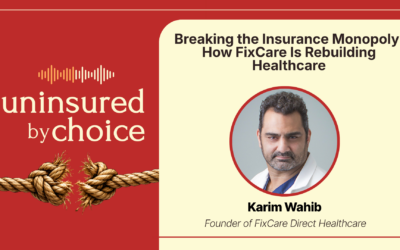
Breaking the Insurance Monopoly: How FixCare Is Rebuilding Healthcare
Episode Summary
- Karim Waheeb, a 20-year physician assistant in Manhattan, shares how watching private practices collapse post-ACA and through COVID led him to launch Fix Care, a direct healthcare savings program serving New York City and Austin for less than a dollar a day.
- Fix Care is a dual-sided marketplace that pre-negotiates transparent cash rates with independent providers, removing insurance as the middleman and giving small businesses, individuals, and the working middle class a network of like-minded doctors who can refer to each other outside hospital systems.
- Karim and Dan discuss why pairing Fix Care with a health share covers roughly 85% of outpatient needs plus catastrophic events, and why building new rails outside the insurance lobby is the only real path to fixing a system that extracts wealth from the taxpayers who use it least.
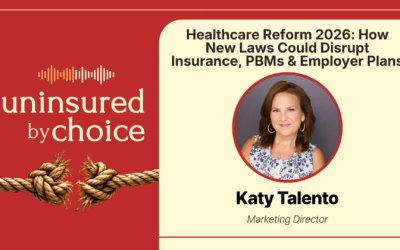
Healthcare Reform 2026: How New Laws Could Disrupt Insurance, PBMs & Employer Plans
Episode Summary
- New federal legislation and a proposed Department of Labor rule are forcing PBMs and insurance carriers to disclose more about their pricing schemes — and Katy Talento sees it as the most promising regulatory momentum in years.
- Katy’s “school choice for healthcare” proposal would let any public or private actor — employers, government programs, even family members — fund a portable health account that individuals could use to buy whatever coverage works for them, from ACA plans to health shares to cash pay.
- A reconciliation package in late 2026 is the most likely vehicle for real reform, and Katy believes it could include federal tax deductions for health share memberships similar to the Kansas law that just survived a governor’s veto.
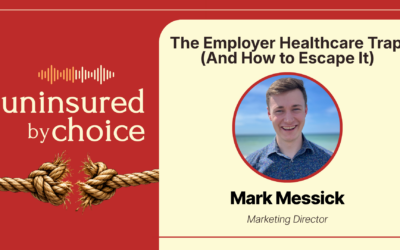
The Employer Healthcare Trap (And How to Escape It)
Episode Summary
- Most employees have little real choice in employer health coverage, but cafeteria-style plans let each employee pick what works best for them.
- ICRAs and Section 125 cafeteria plans give employers a compliant way to fund employee health choices beyond traditional insurance, including health shares.
- Everyone falls into one of three buckets: large ACA subsidy (use it), average health needs without a subsidy (health shares win), or high utilizers with serious conditions (traditional insurance).
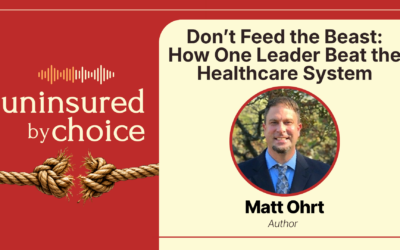
Don’t Feed the Beast: How One Leader Beat the Healthcare System
Episode Summary:
- Matt Ohrt led a multi-year healthcare transformation at Merrill Steel that eliminated premium increases and saved over $5 million by treating healthcare like any other business purchase — shopping for value instead of just buying insurance.
- He outlines a six-step formula for employers to take control of their health plans, built around understanding your current situation, shopping for value across the full cycle of care, and working only with trustworthy partners.
- Now serving as National Executive Director of the Free Market Medical Association, Matt is scaling this grassroots movement nationally — with health shares playing a growing role for both individuals and employer groups.
Health Insurance vs Health Sharing: A Better Option for Freelancers & Families?
Episode Summary:
- Explores how medical cost sharing differs from traditional health insurance, emphasizing a community-driven model focused on healing, transparency, and personal responsibility.
- Highlights key advantages such as no open enrollment restrictions, lower overall costs in many cases, and strong support systems like concierge services to help navigate care.
- Identifies who benefits most from this approach, including self-employed individuals and health-conscious people, while reinforcing that alternatives to traditional insurance do exist.