Key Takeaways
- Traditional health insurance premiums are projected to rise significantly in 2026, making alternatives crucial.
- Health cost sharing programs offer a community-based, often faith-based, and typically more affordable option for medical expense sharing.
- Direct Primary Care (DPC) provides unlimited primary care access for a monthly fee, pairing well with catastrophic coverage or health sharing.
- HSAs combined with High-Deductible Health Plans offer tax advantages and a way to save for future healthcare costs.
- Short-term plans and fixed indemnity insurance are temporary or supplemental options with specific limitations.
- A hybrid approach combining multiple alternatives can provide comprehensive, cost-effective coverage.
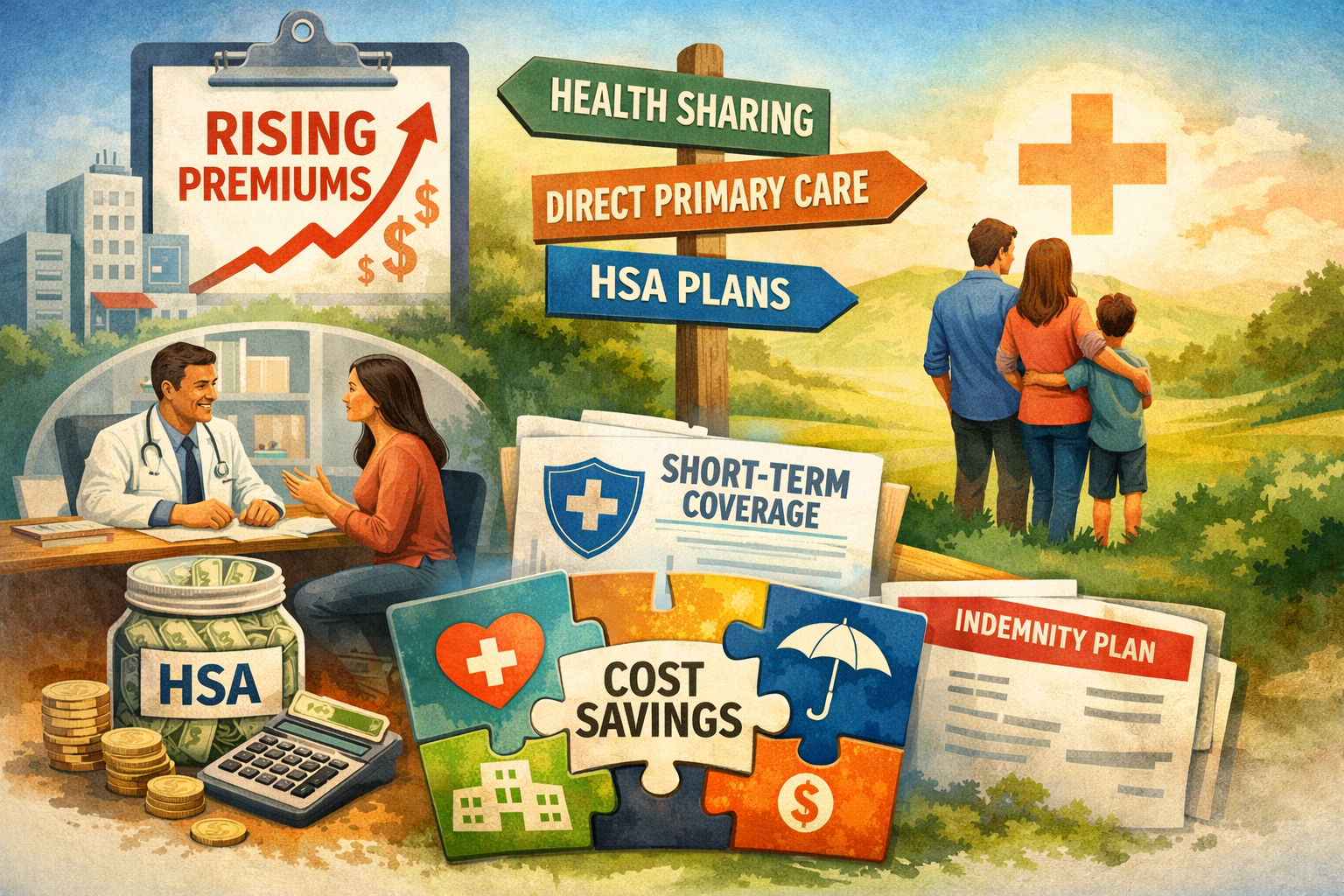
The landscape of healthcare coverage is rapidly evolving, with working-age Americans facing unprecedented challenges in affording traditional health insurance. As premiums continue to surge, many individuals—especially the self-employed, freelancers, small business owners, and those without employer-sponsored group plans—are actively seeking more cost-effective alternatives.
This guide explores alternative healthcare financing models that are gaining traction, providing practical insights and empowering you to make informed decisions for your health and financial well-being. We understand the frustration of rising costs and are committed to offering flexible, community-driven solutions.
The Rising Cost Crisis in Traditional Health Insurance
Traditional health insurance premiums for working-age Americans are projected to rise significantly in 2026, creating an affordability crisis for many middle-income workers. Average employer-sponsored health insurance costs are expected to exceed $18,500 per employee, with group health insurance costs rising 8.5% in 2026. For individuals, average annual premiums reached $8,951 for single coverage in 2025, with family coverage nearing $27,000.
These increases outpace inflation and wage growth, making traditional plans increasingly unaffordable. If enhanced premium tax credits expire at the end of 2025, subsidized enrollees’ monthly payments could more than double, highlighting the urgent need for new solutions. As a result, alternative healthcare financing models are gaining significant traction.
Understanding Your Healthcare Coverage Options Beyond Traditional Insurance
When evaluating alternatives to traditional health insurance, working-age Americans should consider the fundamental differences between insurance and alternative healthcare financing models. Traditional insurance operates on a risk-pooling model where premiums guarantee coverage for defined benefits, while alternatives often involve community-based sharing or direct payment for services.
Key considerations when evaluating alternatives include:
- The extent of coverage for pre-existing conditions
- Limitations on specific services or treatments
- Out-of-pocket maximums and overall cost structure
- Legal and regulatory compliance in your state
- The flexibility to choose your healthcare providers
Understanding these aspects ensures you select an option that aligns with your health needs and financial goals. For many, these alternatives offer significant cost savings and greater control over healthcare decisions.
Health Cost Sharing Programs: Community-Based Healthcare Financing
Health cost sharing programs offer a community-based approach to healthcare financing where members share eligible medical expenses. These programs typically operate on ethical or religious principles, allowing participants to contribute a monthly “share” amount that is then used to help other members with their medical bills.
The cost structure for health cost sharing programs is generally lower than traditional insurance premiums, often about half the cost of unsubsidized health insurance. For example, some programs offer individual contributions ranging from $113 to $297 monthly, which is significantly less than the average employer-sponsored single coverage of $8,951 annually in 2025. Eligibility requirements and participation guidelines vary by program, often including statements of faith or lifestyle commitments.
Zion HealthShare provides a modern, flexible health share option that emphasizes choice and affordability, making it an excellent alternative for those seeking community-driven healthcare solutions. Members benefit from transparent pricing and a supportive community.
This table compares key features, costs, and coverage characteristics of traditional health insurance against popular alternatives, helping working-age Americans make informed decisions about their healthcare financing strategy.
| Coverage Type | Average Monthly Cost | Coverage Scope | Best For | Key Limitations |
|---|---|---|---|---|
| Traditional Health Insurance (ACA Marketplace) | ~$540/month (individual, 2024), projected +26% (2026) (KFF) | Comprehensive, Essential Health Benefits, ACA protections | Individuals/families needing broad coverage, those eligible for subsidies | High premiums, rising deductibles, subsidies expiring 2025 (KFF) |
| Health Cost Sharing Programs | Typically 30-50% less than unsubsidized insurance (e.g., $113-$297/month for individual) (HSA for America) | Community-shared medical expenses, often faith-based, some pre-existing condition limits | Healthy individuals/families, those seeking lower monthly costs, community support | Not insurance, pre-existing condition waiting periods, may not cover all services (HSA for America) |
| Direct Primary Care (DPC) + Catastrophic | DPC: $50-$100/month (adult) (TexMed) + Catastrophic plan premium | DPC: Unlimited primary care; Catastrophic: High-cost emergencies, some preventive care | Individuals/families prioritizing primary care access, healthy individuals seeking emergency coverage | DPC doesn’t cover specialists/hospital; Catastrophic has high deductibles, limited benefits |
| Short-Term Health Plans | 50-80% less than ACA plans (HSA for America) | Temporary, limited benefits, excludes pre-existing conditions | Individuals in transition (job change, waiting for other coverage), young/healthy adults | Not ACA-compliant, significant coverage gaps, federal limits to 4 months total duration (paused enforcement) (AHiX) |
| HDHP + HSA Strategy | Lower premiums than traditional plans; funds contributed to HSA (tax-advantaged) | High deductible for major events, HSA for routine/future costs | Individuals/families with good health, seeking tax benefits and long-term savings | High out-of-pocket costs before deductible met, requires financial discipline |
| Fixed Indemnity Insurance | Starts at ~$25/month (HealthcareInsider) | Fixed cash payouts for specific events (e.g., hospital stay, ambulance) | Supplement to major medical, those with high-deductible plans, freelancers | Not comprehensive, fixed payouts may not cover actual costs, no ACA protections (CIS Health) |
Direct Primary Care (DPC): Subscription-Based Healthcare Access
Direct Primary Care (DPC) is a healthcare model where patients pay a monthly membership fee directly to their primary care provider for a range of services. This fee typically covers unlimited primary care access, including office visits, virtual consultations, and some in-office procedures.
Typical monthly costs for DPC range from $50 to $100 per adult, with children often costing less and family discounts available. These fees are separate from insurance and provide direct access to your doctor, fostering a stronger doctor-patient relationship. DPC pairs effectively with catastrophic coverage or health cost sharing programs to cover emergencies and high-cost events that DPC does not.
Best use cases for DPC include individuals and families prioritizing preventive care, regular access to a physician, and transparent pricing. The “One Big Beautiful Bill Act” now allows DPC fees to be paid with pre-tax HSA funds starting January 1, 2026, if under specific caps, making it even more accessible.
Short-Term Health Plans and Fixed Indemnity Insurance
Short-term health plans can make financial sense for working-age adults experiencing temporary gaps in coverage, offering a lower-cost option compared to ACA marketplace plans. While they can be 50-80% less expensive than ACA plans, it’s crucial to understand their coverage limitations, including exclusions for pre-existing conditions and essential health benefits mandated by the ACA. Federal rules effective September 1, 2024, limit these plans to an initial 3-month term plus one 1-month extension, though enforcement is paused, allowing states to set their own durations.
Fixed indemnity insurance offers another alternative, providing a set cash amount for specific medical events, such as a hospital stay or ambulance ride. Premiums are typically low, often starting at $25 per month. These plans are designed to supplement major medical insurance, not replace it, as payouts are fixed regardless of actual costs and lack ACA protections. They are best suited for individuals with high-deductible plans or those seeking additional cash benefits for specific events.
Health Savings Accounts (HSAs) and High-Deductible Plans Strategy
Health Savings Accounts (HSAs) offer a powerful, tax-advantaged way to save and pay for healthcare expenses when paired with a High-Deductible Health Plan (HDHP). This strategy allows you to manage long-term healthcare costs effectively.
HSAs create tax-advantaged healthcare savings through triple tax benefits: tax-deductible contributions, tax-free growth, and tax-free withdrawals for qualified medical expenses. For 2026, the IRS sets the HSA contribution limit at $4,400 for self-only HDHP coverage and $8,750 for family HDHP coverage, with an additional $1,000 catch-up contribution for individuals age 55 or older. All bronze and catastrophic Marketplace plans on HealthCare.gov are HSA-eligible in 2026, expanding access significantly (CMS).
By pairing an HDHP with an HSA, individuals can pay lower monthly premiums while building a savings fund for future medical needs. This approach is ideal for those who are relatively healthy and want to control their healthcare spending while benefiting from tax advantages.
Combining Multiple Alternatives: A Hybrid Approach
Creating a comprehensive healthcare coverage strategy often involves combining multiple alternative tools. A hybrid approach leverages the strengths of different models to provide robust, yet affordable, coverage tailored to individual needs.
Example combinations include:
- DPC + Health Cost Sharing: Direct Primary Care covers routine visits and preventive care, while a health cost sharing program like Zion HealthShare handles larger, unexpected medical events.
- HDHP + HSA + Telemedicine: A High-Deductible Health Plan with an HSA provides catastrophic coverage and tax-advantaged savings, supplemented by telemedicine for convenient, low-cost virtual consultations.
- Catastrophic Plan + Fixed Indemnity: A catastrophic plan covers major medical emergencies after a high deductible, with fixed indemnity insurance providing cash benefits for specific events to help offset out-of-pocket costs.
This strategic combination allows for greater flexibility and cost control. To calculate total annual healthcare costs, sum the monthly premiums/share amounts, DPC fees, and estimated out-of-pocket expenses (taking deductibles and program limitations into account). Risk management in hybrid models involves understanding the specific coverage gaps of each component and having an emergency fund to cover potential unexpected costs.
Conclusion: Making the Right Choice for Your Healthcare Needs
The rising costs of traditional health insurance demand that working-age Americans explore all available options. From community-based health cost sharing programs like Zion HealthShare to subscription-based Direct Primary Care, and tax-advantaged HSAs, a diverse array of alternatives exists to help manage healthcare expenses without compromising quality of care. Many Americans are finding that these alternatives offer a more sustainable path to healthcare access.
When choosing, consider your health status, financial situation, and tolerance for risk. Transitioning from traditional insurance to alternative models requires careful research and understanding of each option’s scope and limitations. By taking proactive steps and exploring these cost-effective alternatives, you can secure flexible and affordable healthcare coverage for yourself and your family.
Frequently Asked Questions
What is the cheapest alternative to traditional health insurance for working adults?
The cheapest alternative often depends on individual health status and usage patterns, but health cost sharing programs typically offer the lowest monthly costs, often about half the price of unsubsidized traditional insurance. Short-term health plans and fixed indemnity insurance also have very low premiums, starting around $25 a month, but come with significant coverage limitations and are not comprehensive.
How do health cost sharing programs compare to regular health insurance?
Health cost sharing programs differ significantly from regular health insurance as they are not insurance policies. Instead, members voluntarily share eligible medical expenses based on ethical or religious principles. They typically have 30-50% lower monthly costs, but may have pre-existing condition waiting periods and do not guarantee payment of medical bills, unlike traditional insurance contracts. Programs like Zion HealthShare focus on community support and transparent sharing guidelines.
Can I use a Health Savings Account without traditional insurance?
No, you cannot use a Health Savings Account (HSA) without traditional insurance. HSAs require enrollment in a qualified High-Deductible Health Plan (HDHP). For 2026, the contribution limits are $4,400 for self-only and $8,750 for family coverage, allowing individuals to save tax-free for medical expenses while benefiting from lower HDHP premiums.
Is Direct Primary Care worth it if I’m healthy and rarely see doctors?
Direct Primary Care (DPC) can still be worth it for healthy individuals due to its emphasis on preventive care and unlimited access to a physician for a flat monthly fee, typically $50-$100 for adults. This model provides peace of mind and encourages proactive health management, potentially preventing future, more costly health issues. It also offers healthcare access security, ensuring you have a trusted doctor when you do need care, often without additional co-pays.
What are the risks of using alternatives to traditional health insurance?
The primary risks of using alternatives include coverage gaps, particularly for pre-existing conditions, and the absence of consumer protections mandated by the ACA. Many alternatives are not regulated as insurance and may not cover all essential health benefits. This can lead to significant financial risk if unexpected, high-cost medical events occur. It’s crucial to understand precisely what is and is not covered and to have emergency funds to mitigate potential out-of-pocket expenses.
How much can I save by switching from traditional insurance to health cost sharing?
You can potentially save a substantial amount by switching to health cost sharing. For instance, traditional employer-sponsored family premiums averaged nearly $27,000 in 2025, with employee contributions around $6,850 annually. Health cost sharing programs often cost 30-50% less than unsubsidized insurance, translating to thousands of dollars in annual savings for individuals and families, depending on the program and your health needs. Zion HealthShare offers flexible programs designed to deliver significant savings.